[People's Commentary] Artificial Intelligence, Bounded By Law And Ethics
![[People's Commentary] Artificial Intelligence, Bounded By Law And Ethics](https://lcs-sfo.k4v.com/assets/public/default_cover.jpg)
[People's Commentary] Artificial Intelligence, Bounded By Law And Ethics
Through in-depth discussions on the legal, ethical and social issues related to artificial intelligence, we will draw the legal and ethical boundaries for the intelligent society and let artificial intelligence serve human society.
Through in-depth discussions on the legal, ethical and social issues related to artificial intelligence, we will draw the legal and ethical boundaries for the intelligent society and let artificial intelligence serve human society.
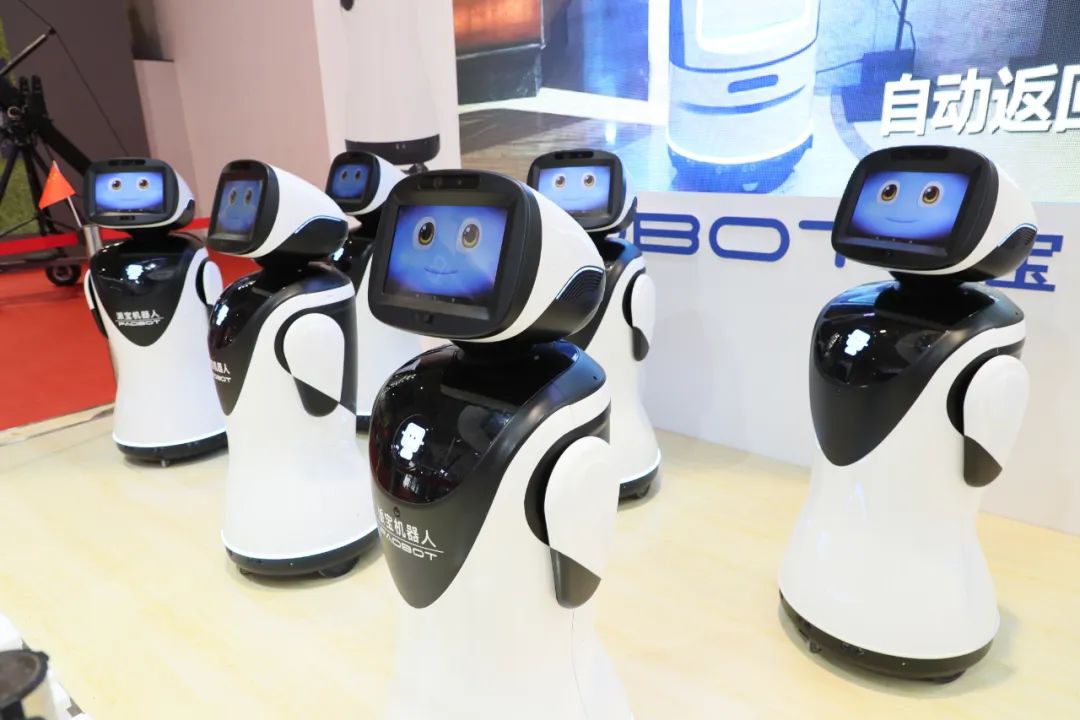
Thanks to China's outstanding progress in the Internet, big data, cloud computing and other fields, artificial intelligence is developing rapidly in the country. On August 23, the 2017 World Robot Conference, with the theme of "Innovation, Entrepreneurship and Creation, to Meet the Intelligent Society", officially opened at the Beijing Etron International Convention and Exhibition Center. In the foreseeable future, China's artificial intelligence industry will flourish in fields such as autonomous driving, smart medical care, smart finance, and robotics.

From entertainment, travel to payment methods, artificial intelligence is quietly changing our lives. In July this year, the State Council issued the "New Generation Artificial Intelligence Development Plan", pointing out that artificial intelligence has become a new focus of international competition and a new engine of economic development, bringing new opportunities for social construction. At the same time, the uncertainty of artificial intelligence development also brings new challenges. Among these new challenges, perhaps the most concerning to ordinary people is the "human-machine relationship" in the era of artificial intelligence: Is there a risk of high-level artificial intelligence losing control? Will machines in the future challenge the order of human society, or even gain the ability to autonomously shape and control the future? With the rapid development of artificial intelligence, many people have such worries.
Whether high-level artificial intelligence brings benefits or challenges is a theme that is constantly discussed in many literary, film, and philosophical works. In recent years, mass media’s attention to artificial intelligence has inadvertently aggravated people’s anxiety about the “human-machine relationship.” "Two-dimensional" virtual idols supported by sound libraries and holographic projection technology took the stage to sing and dance. Artificial intelligence used face recognition technology and deep learning capabilities to challenge human memory masters. "Alpha Dog" defeated Go masters from various countries and conquered the high ground of human intelligence games... In particular, some variety shows that use "human versus computer" as a gimmick, by confusing the concept of artificial intelligence, artificially exaggerate a tense atmosphere of confrontation between humans and machines, which is neither necessary nor scientific.

In fact, all artificial intelligence now still belongs to "intelligence" defined under the concept of "Turing Test". Whether it is the translation program based on the neural network algorithm that will become popular, or the various models based on quantum computing theory, they will be tools subordinate to humans for a long time in the future. Writer Han Shaogong put forward the interesting hypothesis of "when robots form a writers association", explaining his views on the antagonistic relationship between humans and machines from a literary perspective. He believes that values are the ultimate characteristics and advantages of human beings. The development of artificial intelligence should prompt people to conduct a more profound exploration of the nature of their own existence and strengthen the value of human existence.
Nonetheless, as we enter the era of artificial intelligence, we still need to carefully define the relationship between humans and machines. The State Council proposed in the "New Generation Artificial Intelligence Development Plan" to "establish artificial intelligence laws, regulations, ethical norms and policy systems, and form artificial intelligence safety assessment and control capabilities." In the future, through in-depth discussions on legal, ethical and social issues related to artificial intelligence, legal and ethical boundaries should be drawn for the intelligent society, so that artificial intelligence can serve human society. This is also a consensus worldwide. Earlier this year, the MIT Media Lab and Harvard University's Berkman Klein Center for Internet and Society launched an AI ethics research plan. Giants such as Microsoft and Google have also established AI ethics committees due to the risks of the development of artificial intelligence. A growing number of robotics experts are calling for "ethical black boxes" to be installed on robots and automated systems to record the machines' decisions and actions. People have realized that the development of artificial intelligence should be based on the stability and well-being of human society.
China is developing rapidly in the field of artificial intelligence, and the advantages of Chinese traditional culture should also be used to build the relationship between humans and machines in the future. In the face of high-level artificial intelligence, we must not only regulate it through laws and policies, but also use civilization and ethics to give it more open flexibility. In this regard, I believe that the Chinese civilization tradition will be more useful than the Western civilization tradition that emphasizes logic and empirical evidence, and will be more helpful in developing "Chinese Intelligent Manufacturing" that takes into account science and technology and humanities.