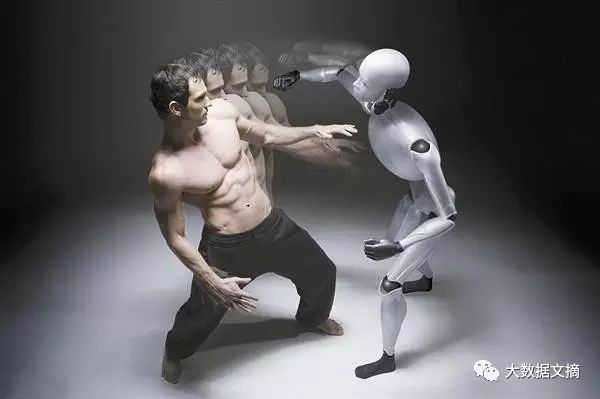
Did You Know? The Hottest AI Applications Actually Hide Huge Risks!

Did You Know? The Hottest AI Applications Actually Hide Huge Risks!
In this era of rapid technological development, artificial intelligence (AI) has become an indispensable part of our lives. From smart voice assistants to autonomous driving, from personalized recommendations to smart medical care, AI seems to be everywhere, bringing unprecedented convenience and surprises. But
In this era of rapid technological development, artificial intelligence (AI) has become an indispensable part of our lives. From smart voice assistants to autonomous driving, from personalized recommendations to smart medical care, AI seems to be everywhere, bringing unprecedented convenience and surprises. However, have you ever thought about: What kind of huge risks are hidden behind these popular AI applications? Are they really "angels" or "devils"?

When you are immersed in the convenience brought by AI, are you aware of the hidden dangers? Many people only see the "miracles" brought by AI, but ignore the privacy leaks, spread of bias and even security threats they may cause. For example, the most popular AI chatbots, facial recognition technology, intelligent recommendation systems... While these technologies provide us with convenience, they are also constantly "peeping" at our privacy.
Did you know? Many AI applications collect your data without explicitly telling you what they are doing. Every search, every click, and every voice command you make is being "recorded" and "analyzed." This data is used to "shape" your personality, influence your decisions, and even manipulate your behavior. Isn't this a kind of "invisible surveillance"? When your life is gradually controlled by algorithms, will you still believe in "free will"?
What’s even more shocking is that these AI systems may be biased and discriminatory! Did you know that many facial recognition technologies have vastly different accuracy rates when identifying people with different skin tones? Some AI recruitment systems may unintentionally discriminate against certain groups, causing "bias amplification." These biases originate from biases in training data, but they invisibly affect our lives and future.

Moreover, the most popular AI applications also have hidden security risks! Hackers can use AI vulnerabilities to carry out "deep forgery", create realistic fake news, fake videos, and even manipulate elections. Have you ever been fooled by “fake news”? Behind this may be the "dark side" of AI. Once these technologies fall into the hands of criminals, the consequences can be disastrous.
Do you think that the "black box" of AI is too difficult to understand? Many AI algorithms are complex and difficult to understand, making it difficult for ordinary people to judge whether their decisions are fair and reasonable. This is like a "black box" that prevents us from tracing and questioning. In the future, if AI makes decisions in key areas such as justice, finance, and medical care, are we ready to accept their "judgments"?
What's worse is that the rapid development of AI brings the risk of "out of control"! Once AI has autonomous learning capabilities, "unpredictable" behavior may occur. The "artificial intelligence rebellion" like in science fiction movies seems to be far away, but the scientific community has long warned: we must remain vigilant against the potential risks of AI.
So, what should we do in the face of these hidden dangers? Should we give up on AI innovation? Of course not! But we must look at it rationally: the application of AI should be strictly regulated, data privacy must be protected, biases must be identified and eliminated, and security measures must be fully implemented.
To sum up: the hottest AI applications have indeed brought huge changes and conveniences, but the risks hidden behind them cannot be ignored. We cannot blindly trust technology, let alone ignore the "hidden dangers" they may bring. Only when AI is used and supervised rationally and prudently can it truly become a "good helper" to humans instead of a "potential threat."
Did you know? AI in the future may bring about the greatest progress in human history, or it may also cause unprecedented crises. The key lies in how we grasp this "double-edged sword." Are you ready for this challenging future?