Artificial Intelligence, Like Global Warming, Requires Vigilance. AI Ethics And Supervision Have Triggered Heated Discussions In The Industry.

Artificial Intelligence, Like Global Warming, Requires Vigilance. AI Ethics And Supervision Have Triggered Heated Discussions In The Industry.
Some rapidly disruptive technologies have a huge impact on human decision-making, which makes AI ethics and regulatory issues very critical."
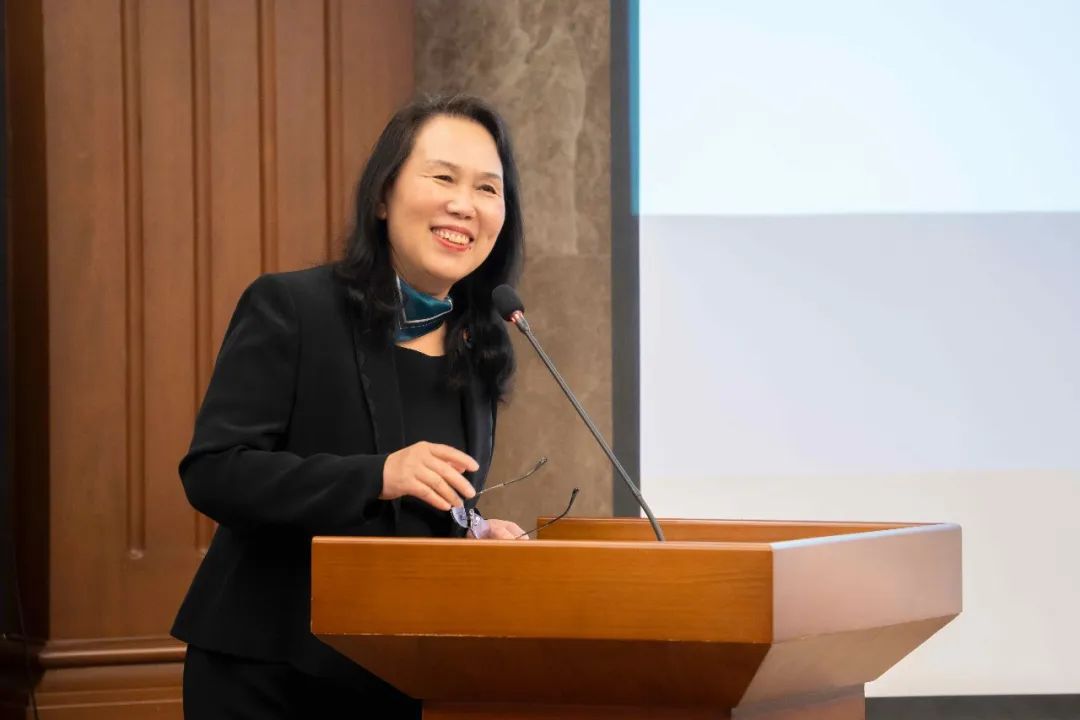
"Artificial intelligence helps society achieve well-being and changes the trajectory of humanity through eventual automation, but this trajectory may not be our preset direction. Some rapidly disruptive technologies have a huge impact on human decision-making, which makes AI ethics and regulatory issues very critical." Director of the European Center of Taihe Think Tank, said at the Artificial Intelligence Ethics and Governance Network Construction Seminar held on May 22.
As a higher-level computer program, artificial intelligence is increasingly penetrating into all aspects of human life. While holding great hopes for the future of AI, humans are also worried about this new thing. As countries continue to seek to maximize the benefits of artificial intelligence, how to deal with its ethical and regulatory issues and minimize systemic risks and negative effects is also hotly debated.
“When we talk about ethics, we always talk about minimizing risks.” Wendell Wallach, director of the Technology and Ethics Department at the Yale University Bioethics Center, emphasizes the goal pursued by AI ethics.

Photo provided by the organizer
What AI principles do humans need?
In March this year, China's New Generation Artificial Intelligence Governance Professional Committee held its first meeting. As members of this organization, Xue Lan and Zeng Yi also participated in this seminar hosted by Taihe Think Tank. Xue Lan, dean and professor of Schwarzman College at Tsinghua University, believes that China often has a great enthusiasm for innovation. China actually missed the first three industrial revolutions, and in the era of transformation of artificial intelligence, China must take risks together and explore AI principles.
"Unifying AI principles or standards is unnecessary and impossible, because no one knows what stage AI can develop in the future." Zeng Yi, deputy director of the Brain-inspired Intelligence Research Center of the Institute of Automation, Chinese Academy of Sciences, said that about 42 different AI principles have been proposed, and it can even be reduced to 28. But through analysis, we can see that there is actually no AI principle that can cover all content.
Last month, the European Union released AI ethics guidelines, calling for "trustworthy artificial intelligence" as seven principles that companies and government agencies should follow when developing AI in the future. Specifically, they include human role and oversight, technology robustness and security, privacy and data management, and more.
When the public talks about AI governance, words such as security, ethics, morality, and privacy are mentioned repeatedly. In the view of some researchers, after the advent of the artificial intelligence era, how to improve the transparency of artificial intelligence should be the first priority. Wendell Wallach is one of those who holds this view. He believes that "we are now creating more and more complex systems, which may exceed our capabilities." Artificial intelligence is like a black box, and the top priority is to understand it as much as possible.
In his speech, Pan Tianyou, vice president of Microsoft Research Asia, focused on "people". He believes that artificial intelligence is ultimately a tool of human beings and is beautiful from the beginning. The governance of artificial intelligence must ultimately return to humans themselves. Pan Tianyou also advocates that artificial intelligence should not be enjoyed by a small group of people, and that artificial intelligence technology should replace repetitive labor and release manpower.
Building consensus requires global collaboration
It was pointed out at the seminar that climate change is a common challenge faced by the world at present, and the development of artificial intelligence is also following this trend. It is no longer a problem of a certain region or country, but requires global collaboration to establish a widely recognized AI principle.
Faced with the ethical issues that artificial intelligence has or may cause, technology giants outside the national level have established ethics committees to deal with the challenges. The "Daily Economic News" reporter noticed that Amazon, Microsoft, Google, IBM, and previously jointly established a non-profit artificial intelligence cooperation organization (on AI). Apple joined the organization in 2017. At the same time, each company also has its own AI ethics committee.
At the beginning of this year, the Beijing News reported that the Google AI Ethics Committee, which had just been established for a week, was disbanded. Wu Dekai, a professor at the Department of Computer Science and Engineering at the Hong Kong University of Science and Technology, is one of the eight members of Google’s organization. At this seminar, Wu Dekai clarified, “Google has never used the word committee. It uses consultation instead of governance. There is a misunderstanding in this.
"In AI, we need to carry out in-depth translation, not very shallow translation. We need to describe without any bias or standpoint, and only after mutual understanding can we learn from each other." Wu Dekai emphasized that different cultures and different voices must be heard.
Liu Yang is a researcher at the Center for Future Intelligence at the University of Cambridge, and his other identity is a researcher at the Department of Philosophy. "China is a force that cannot be ignored in terms of artificial intelligence innovation, but in the work I am engaged in, I realize that many reports have some misunderstandings about China's artificial intelligence development. I hope that more Chinese voices will be brought to the West."
Wang Yiwei, a professor at the School of International Relations at Renmin University of China, said during the discussion that the "gap between rich and poor" in artificial intelligence may widen in the future, and humans will become more dependent on intelligence in the future, which will intensify the solidification of social classes. On the other hand, Chinese culture places more emphasis on harmony, interconnection and openness, and the new generation of artificial intelligence technology can easily achieve such goals.
daily economic news

![[Speaking By South China University Of Science And Technology] Humans Give Artificial Intelligence Ethics, And Breakthroughs In The Direction Of Biological Evolution Are The Key](https://lcs-sfo.k4v.com/sites/38/article/2025/02/19/183/images/7dd34943ddad152fb2596da1e7a2f9c5.jpeg)